
Hybrid working and changing team structures are leading companies to increasingly look for workplaces that can adapt alongside their organization. Flexible office solutions are playing an ever-growing role in this. What once started as a solution for freelancers and start-ups has now developed into a fully-fledged alternative to traditional office leasing.
An organization that has experienced this development up close is Element Offices. We spoke with Sam van Breukelen, Sales Manager at Element Offices, about the changing office market, their Walborg location in Amsterdam, and the future of flexible working.
From niche to the new standard
Flexado and Element Offices have been working together on flexible workspace solutions for more than fourteen years. During that time, the market has undergone a clear development. Whereas flexible offices were once mainly popular among start-ups and freelancers, today corporates and larger organizations are increasingly choosing flexible workspaces as well. According to Van Breukelen, hybrid working has particularly accelerated this development. “Companies want fewer long-term commitments and are looking for workspaces that can adapt to their growth or change,” he explains. Where it used to be primarily a fixed workplace, it is increasingly becoming a place where teams come together, meet clients, and collaborate. “More and more companies are combining working from home with an inspiring workplace,” says Van Breukelen. Flexible office locations offer various possibilities for this, such as private offices, flexible desks, meeting rooms, and virtual office addresses. “As a result, flexible offices have evolved from a niche product into a fully-fledged alternative to traditional lease agreements.”
At the same time, users’ expectations have also changed. ‘It’s no longer just about a desk and internet,’ he says. ‘Companies are looking for a complete experience with design, hospitality, community, and high-quality facilities.’ Element Offices has been focusing on exactly that combination for many years.
Walborg: a new perspective on office space in Amsterdam
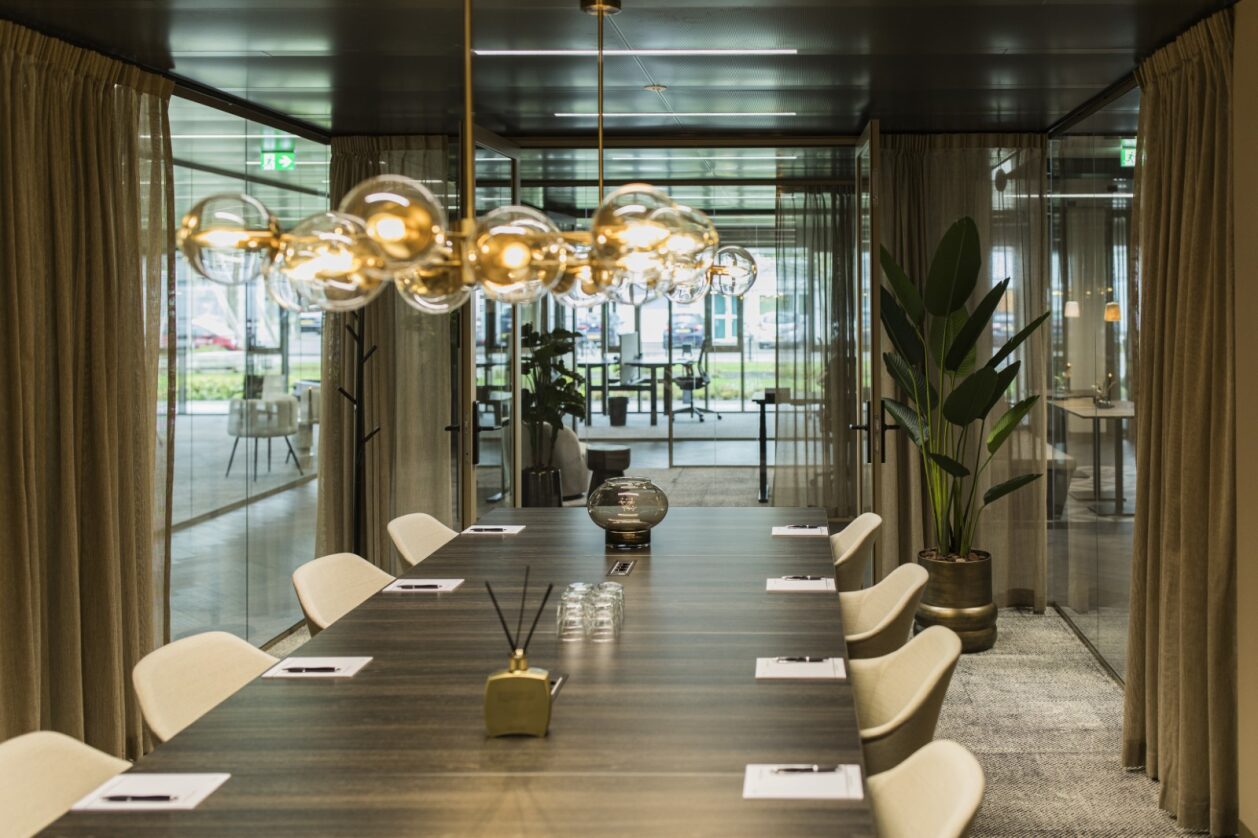
With Walborg, Element Offices responds to a clear demand in the Amsterdam office market. According to Van Breukelen, the goal was to create more than just workplaces. “With Walborg, we wanted to establish an inspiring working environment where tranquility, greenery, and urban dynamism come together.” Design, sustainability, and flexibility form the foundation, allowing companies to easily adapt their workspace to changing needs. In a competitive market such as Amsterdam, differentiation is essential. Element Offices therefore places strong emphasis on the overall work experience. “Our locations are designed with great attention to interior design and atmosphere, making them feel more like a boutique hotel than a traditional office.” Walborg also holds a BREEAM Outstanding certification, placing it among the most sustainable office buildings in the Netherlands. “Companies don’t just rent an office with us, but a complete working environment.”
The power of community in the workplace
In addition to design and facilities, community is playing an increasingly important role within modern office locations. Many companies are not only looking for a workplace, but also for an environment where they become part of a network of other professionals. “Many entrepreneurs appreciate becoming part of a network of ambitious companies,” says Van Breukelen. At Walborg, this is encouraged through shared spaces such as The Lounge, where members can meet, collaborate, or network informally. In addition, Element Offices regularly organizes events, and companies can easily connect with other organizations within the network through the Element Offices app. “This creates a dynamic environment in which collaboration and knowledge sharing arise naturally.”
What companies expect from a workplace today
When choosing office space, companies nowadays consider a broader combination of factors. Flexibility is often at the top of the list. “Organizations want contracts that can adapt to their growth,” says Van Breukelen.
In addition, accessibility, sustainability, and appearance play an important role. The quality of the working environment is also receiving more attention. “Companies pay more attention to good design, comfortable workspaces, strong meeting facilities, and a professional reception for visitors.” At the same time, the social component is becoming more important as well. “Community and networking opportunities are playing an increasingly significant role, because companies value an inspiring environment where collaboration and interaction are possible.”
Who Walborg is designed for
A strategic expansion in Amsterdam
The future of flexible work
Website: https://elementoffices.nl